American Legion Post 31 hosts annual Memorial Day program
Memorial Day can trace its roots back to a few years after the American Civil War. Many areas had what they called Decoration Day to honor veterans from the conflict.
As time progressed, the observance morphed into what we now call Memorial Day, which became an official national occurrence in 1971. It is observed on the last Monday of May each year.
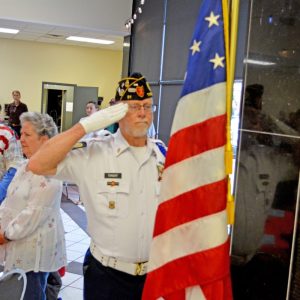
On May 27, members of American Legion Post 31 in Tuscumbia held the annual Memorial Day ceremony on the Colbert County Courthouse lawn.

SFC Jeremy Blackwell gives the keynote address during the Memorial Day program.
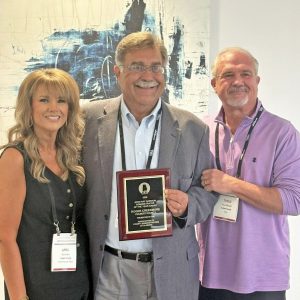
Keynote speaker for this year’s event was Sergeant First Class Jeffrey A. Blackwell of Sheffield, who served in the Special Forces Group (Airborne) and Alabama Army National Guard (Retired).
One of the major topics of Blackwell’s speech was the ongoing mental health struggles for many of America’s veterans.
The most prominent issue is posttraumatic stress disorder, or PTSD. According to the United States Department of Veterans Affairs, PTSD is a mental health problem that can only develop after you go through or see a life-threatening event.
“It’s normal to have stress reactions to these types of events, and most people start to feel better after a few weeks. If symptoms last longer than a month and are causing problems in your life, it could be PTSD,” according to the VA.
“Anyone can develop PTSD at any age. Some factors can increase the chance that someone will have PTSD, many of which are not under that person’s control. For example, having a very intense or long-lasting traumatic event or getting injured during the event can make it more likely that a person will develop PTSD. PTSD is also more common after certain types of trauma, like combat and sexual assault.”
According to the VA, an estimated 30% of Vietnam veterans suffer from PTSD compared to 11% to 20% of Iraq and Afghanistan veterans.
“Many Vietnam veterans suffered an especially difficult transition back into civilian life due to the widespread protests against the war,” said the VA. “Even now, when searching ‘Why are Vietnam Veterans … ‘ in Google, the first few words that pop up to complete the sentence are ‘homeless,’ ‘crazy’ and ‘hated.’”
According to a 2023 report compiled by the VA, 6,000 veterans died by suicide in 2001. While that number has fluctuated each year, it has never dropped below that figure, with 6,392 reported veteran suicides in 2021, the last year of figures given in the report.
Broken down, 17.5 and 22 veterans die by suicide each day.
Blackwell said that figure is way too high, and he stressed men and women who served their country deserve to get the help with mental health they need.
“We don’t want to plant any more people under those white tombstones than we have to,” he said. “There has to be a better way. We need to engage with veterans and understand what it is they are feeling to give them hope. Everyone passes away eventually, but we don’t want to put them under a tombstone before we have to.”
According to the VA, most suicide attempts by those who are or will become veterans occur following separation from military service.
Veterans are most vulnerable in the first three months following separation from military service, although suicide risk remains elevated for years after the transition.
Veterans who were discharged for disability, disqualification or misconduct have higher odds of suicidal ideation and behavior than those who received a routine discharge.
Veterans who received general or other than honorable (OTH) discharges were more likely than those honorably discharged to screen positive for generalized anxiety, depression, posttraumatic stress disorder (PTSD), a history of traumatic brain injury or alcohol or cannabis misuse.
While 27 percent of all Veterans reported having had a difficult time readjusting to civilian life, 44 percent of the post-9/11 cohort indicated difficulty in readjusting.
Veterans reported difficulty in several areas during reintegration into civilian life, including problems with productivity at work or school; an inability to take care of chores or health needs; and difficulty interacting with spouses, family members, and friends.
Researchers also found that veterans reported an increase in potentially harmful behaviors like substance misuse, difficulty controlling anger, having thoughts about hurting someone and dangerous driving.
PTSD is such a common occurrence among veterans that the U.S. Department of Veterans Affairs has a website dedicated to the issue.
According to the site, PTSD symptoms usually start soon after the traumatic event, but they may not appear until months or years later. They also may come and go over many years. If the symptoms last longer than four weeks, cause you great distress, or interfere with your work or home life, you might have PTSD.
There are four main types of PTSD symptoms: reliving the event (such as in nightmares or flashbacks), avoiding things that remind you of the event, having more negative thoughts and feelings than before the event and feeling on edge (jittery, always alert or looking for danger).
“Both trauma-focused psychotherapy (sometimes called counseling or talk therapy) and medication are proven to treat PTSD. Sometimes people combine psychotherapy and medication,” said the VA.
Blackwell also mentioned a series of mental health issues that have come to be known as Gulf War syndrome.
While the VA website says professionals looking to treat the condition do not refer to it by this name, it is a “cluster of medically unexplained chronic symptoms that can include fatigue, headaches, joint pain, indigestion, insomnia, dizziness, respiratory disorders and memory problems” experienced by veterans of the Gulf War conflict.
Anyone dealing with thoughts of suicide or self-harm has a number of resources available for help, including a national 988 Lifeline that can be called or texted.
According to the group’s website, the 988 Lifeline provides 24/7, free and confidential support for people in distress, prevention and crisis resources for you or your loved ones, and best practices for professionals in the United States.